A Practical Guide to Burnout Recovery
May 28 - Written By: Katie McClure, LPC-A

Burnout isn’t just stress. Discover common symptoms, causes, and therapist-backed strategies to help you recharge and restore balance in your life!
It is all too often that we hear the phrases, “Gosh, I’m so burnt out today” or “I just have to recharge my batteries”. How do we respond? Well, in many different ways. You may take the day off or have a ‘spa night’. You might also push through the exhaustion. You might even add more to your (very full) plate. Maybe the break brought you some relaxation. Maybe distracting yourself helped you to forget that icky feeling. The problem is that the relief is only temporary. The good news is burnout is totally normal! Whether it’s your parent, friend, coworker, or neighbor, someone you know has experienced burnout too. Burnout is a condition of the human journey and a result of unmanaged, chronic stress. Managing our stress isn’t always easy, especially with a complex set of human emotions and experiences. In this burnout blog post, I’d like to bring attention to warning signs, symptoms, causes, recognizing different phases of burnout, strategies, and treatment. Being burnt out is never easy nor fun. I think it is important to bring awareness to the burnout epidemic and equip ourselves with practical tools to address it. With that being said, welcome to Burnout 101!
So, what is burnout?
Burnout can be defined by a state of mental, emotional, and physical exhaustion as a result of prolonged stress. In lighter terms, it’s feeling really freaking tired as a whole person. Common onsets of burnout and chronic stress can be work stress, excessive working, lack of support, lack of enjoyment, and many more. There isn’t just ‘one thing’ that can create burnout, but it is more likely to occur when someone is experiencing multiple stressors.
How can I tell if myself or someone I know is experiencing burnout?
Well, I’m so glad you asked! The short answer: there are many ways to tell if you or someone you know is experiencing burnout. Now, let’s get to the details.
Warning Signs:
Persistent exhaustion
Increased cynicism or negativity
Small tasks feel overwhelming
Decreased empathy
Avoidance
Physical Symptoms:
Chronic fatigue
Problems with sleep
Headaches
GI issues
Muscle tension
Internal Experiences/Symptoms:
Feelings of helplessness
Negative self-talk
Emotional detachment
Reduced/lack of motivation
Burnout can look different for everyone, but these are just a few common things to look for.
Another way to detect burnout is our behavior. Everyone’s response to burnout is unique to them, but there are general themes. The most common behavioral patterns are procrastination and a decline in performance. You may notice decreased productivity or difficulty completing tasks. Social withdrawal and irritability are also examples of behavioral patterns associated with burnout.
There are a variety of warning signs and symptoms associated with burnout. It can appear as exhaustion, anxiety, headaches, or even irritability. The point is, not everyone experiences burnout the same way. Exploring mental experiences, behavioral responses, and body awareness can help you to notice how burnout may show up for you.

5 Stages of Burnout
You can use this guide to get a better idea of what stage of burnout you might be experiencing and some practical tools to apply!
Stage 1: Honeymoon Phase
Signs: job satisfaction, responsibility, sustained energy, optimism, commitment, high-level productivity, creativity, etc.
Tools: recharging and relaxing (i.e., reading, breathing techniques, exercise)
Stage 2: Onset of Stress
Signs: difficulty concentrating, anxiety, fatigue, headache, reduced social interactions, personal neglect, decreased productivity, etc.
Tools: positive coping strategies (i.e., set boundaries, talking to support system, leisure activities)
Stage 3: Chronic Stress
Signs: persistent fatigue, procrastination, resentment, social withdrawal, denial, pressure, substance abuse, aggression, cynicism
Tools: build a self-care routine (i.e., exercise, meditation, sleep hygiene, vacation, lifestyle adjustments)
Stage 4: Burnout
Signs: obsession with problems, physical symptoms, self-doubt, social isolation, neglect of needs, escapism, behavioral changes
Tools: seek professional help
Stage 5: Habitual Burnout
Signs: chronic sadness, chronic mental fatigue, chronic physical fatigue, depression
Tools: seek professional help, build a self-care routine, and take a vacation/break
Why does burnout happen?
There isn’t just one reason as to why burnout occurs; it can be a variety of factors working together. However, the relationship between our workload, stress, and burnout can give us some helpful information. These three factors are directly correlated.
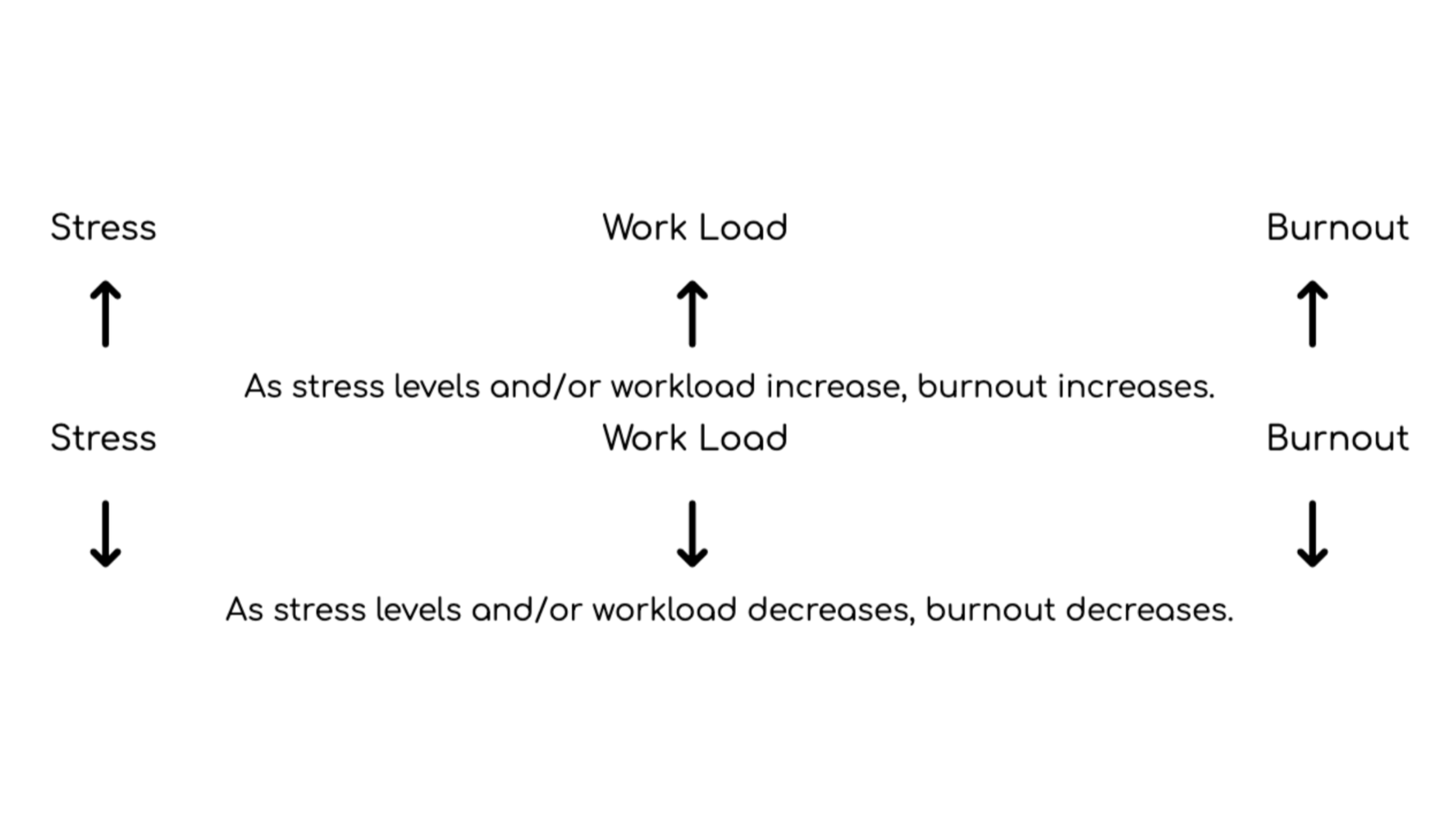
In short, if one factor increases, all the factors can increase. Vice versa.
Now, there are many contextual domains that can impact any of the factors above. Here are a few:
Perceived lack of control: lacking accessibility/autonomy can increase stress/decrease productivity
Reward: lack of incentive and motivation can increase workload/decrease productivity - Community: lack of support and fulfilling relationships can increase stress/decrease productivity
Fairness: lack of equitable treatment can increase stress/decrease productivity - Values: lack of fulfillment can decrease productivity/increase stress
It is important to take a broad look at the contextual factors of your life when assessing for burnout. It is helpful to notice what things are contributing to the relationship between workload, burnout, and stress.
Burnout Fake News
Myth #1: Burnout = Stress
The most common misconception I hear about burnout is that it is just stress. While I wish it were that simple, that just isn’t the case. Here is the truth about burnout and stress: they directly impact one another. Burnout is the result of neglecting stress, allowing it to become chronic stress. When stress goes up, burnout goes up. Remember?
Myth #2: Burnout only shows up at work
Another misconception related to burnout is that it is only associated with working. While burnout is heavily associated with excessive work, it can show up in any aspect of life. Being a parent or caregiver is an extremely demanding task. Parents have some of the largest workloads of us all, which is directly correlated to burnout. Many of us also suffer from overcommitting our personal lives, which promotes burnout. All in all, burnout shows up everywhere.
Myth #3: Fixing burnout just requires willpower
“Just get over it”, “don’t be a baby”, “one more hour”, “just work harder”. I hear these phrases all too often. Many people believe that just “pushing through” the burnout will get them to the other side. Chronic stress impacts the stress-response system. In simpler terms, your body and brain believe that any stressor is an emergent threat. Sucking it up just isn’t going to work in this case. Burnout must be addressed by more meaningful and deeper strategies.

Practical Tips to Address Burnout
Acknowledge
Accept that you’re burnt out and that it is not a sign of weakness
Give yourself credit for what you have been able to do
Set Boundaries
Say “not now” to things that don’t HAVE to be completed
Small limits (microbreaks before tasks, timers, etc.)
Work/life boundaries (set work start/stop times and stick to them)
Reduce screen time/overwhelming media
Realistic Breaks and Rest
Deep breathing or calming music during daily tasks (dishes, laundry, shower, driving, cooking)
1-2min quiet time before starting something
Stretching
Replace doomscrolling with positive podcast/ebook
Prioritize Self-Care
Build free time into routine
Identify and let go of nonessential tasks
Bare minimum (drinking water, unclench jaw, relax shoulders)
Give yourself some grace
Seek Support
Support system
Seek mental health professional
Local or online support groups
Burnout isn’t linear. It is important to notice how burnout is showing up and ways to address it. If you are experiencing chronic stress or burnout, I recommend seeking support. If professional help
isn’t accessible, talking to a friend or an online
support group are ways to feel supported
through burnout.
How can therapy help you with burnout?
Therapy can be a powerful support for someone experiencing burnout. Therapy can offer a safe space to slow down and understand what is driving the overwhelming fatigue. It can also help you identify patterns of perfectionism, overcompensation, or avoidance that may be prolonging burnout. A therapist can work with you to develop strategies that support meaningful change and long-term well-being.
This guide’s purpose is to provide education and resources related to burnout, and I hope it has left you feeling empowered. Burnout doesn’t mean you failed; it is often a signal that you need support. By investing in these skills and treatment, we can move from simply pushing through to making intentional choices that restore our sense of self.